Minutes Matter: How Clifton Village is Taking Charge of Cardiac Health
An evening of adrenaline, education, and community spirit with expert Marijke Van Eerd
The Event: Cardiovascular 101
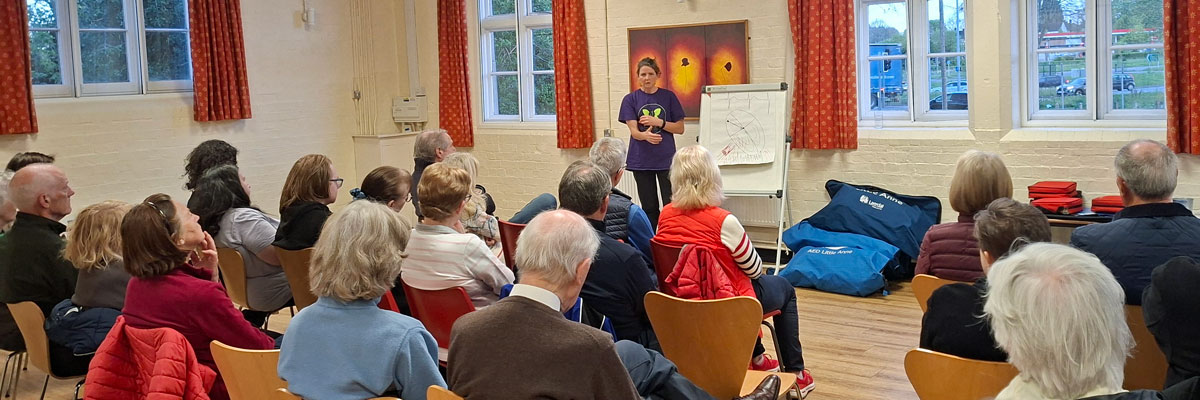
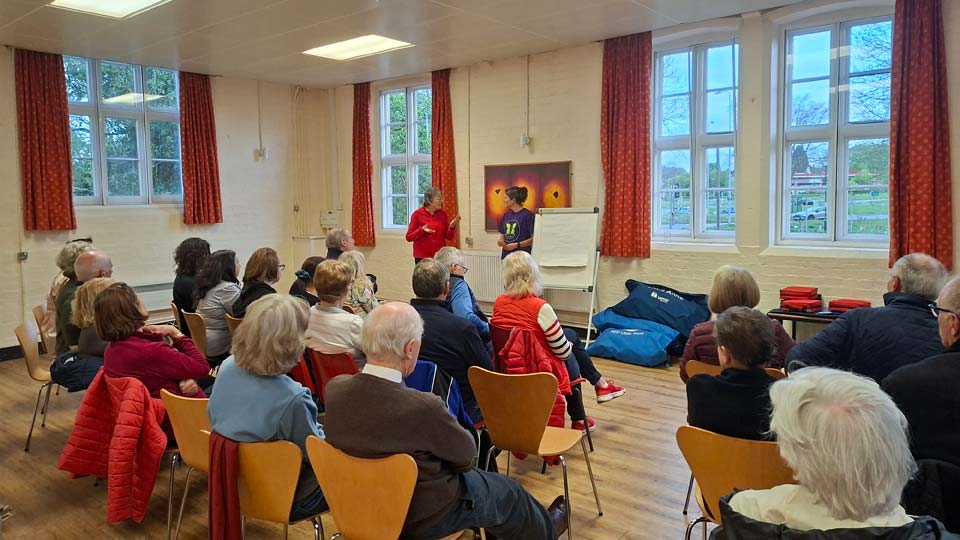
The Village Hall was at capacity on Monday night for a masterclass in emergency response. Marijke van Eerd, who works as a paediatric clinical practitioner in the children and young people's emergency department and who has recently raised awareness of sudden cardiac death at a world congress for paediatric emergency medicine in Brazil, traded the hospital ward for the community to share her life-saving expertise with residents.
The atmosphere was one of focused energy as Pat Rice, Chair of the CVRA, opened the evening. It had been almost exactly two years since Marijke's last visit, and the turnout was a testament to the villages's commitment to safety. With approximately 50 people in attendance, the demographic was a heartening cross-section of our neighborhood, ranging from eager teenagers to engaged octogenarians.
Marijke, noted that Clifton Village consistently provides the largest turnout of any community she visits. However, the warmth of the welcome was balanced by the gravity of her message. While her personal drive to educate others is rooted in experiences from her own teenage years, her current work is inspired by her close connection with the parents of Joe Humphries. Joe tragically passed away at just 14 years old while jogging in 2012, and Marijke now raises awareness on behalf of the Joe Humphries Memorial Trust (JHMT) to ensure other families are spared such heartbreak.
The reality of the training was brought home by local resident Kevin
McCormick. Sharing
his own story, Kevin offered a simple, powerful
endorsement: "It really works." His life was saved by the presence
of our village defibrillator and, crucially, the confidence of
neighbours who didn't hesitate to act. As Marijke set the scene with
a sobering statistic - that 12 people every week die from sudden
cardiac arrest - the room fell silent. Many of those lives, she
reminded us, are saveable through the very skills we were there to learn.
Theory: Understanding the "Short Circuit"
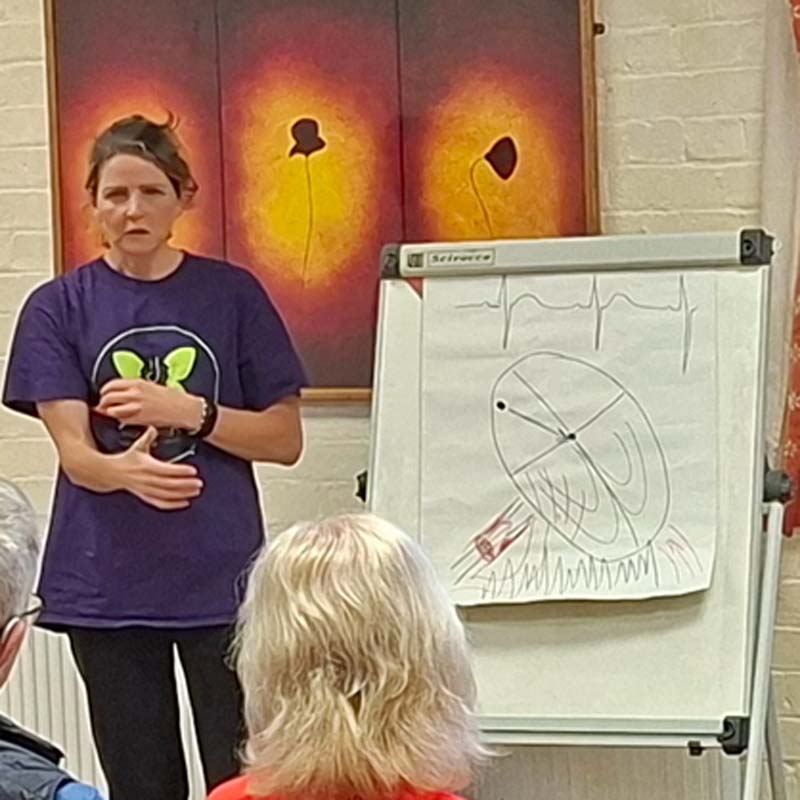
Marijke has a gift for demystifying complex medicine.
Starting with a blank sheet of paper, she illustrated the cardiovascular system as she spoke, building a clear map of how our hearts actually function. It wasn't "fancy," but it was perhaps the clearest explanation many of us had ever heard - a true "Cardiovascular 101".
The core of the theory section focused on the critical distinction between two terms often used interchangeably:
Heart Attack vs. Cardiac Arrest.
The Heart Attack (A Circulation Problem): Imagine a blockage in a pipe. A heart attack occurs when blood flow to the heart muscle is restricted, usually by a clot. The heart is still beating, and the person is usually conscious, but they may experience chest pain, nausea, or light-headedness.
Cardiac Arrest (An Electrical Problem): This is a "short circuit." The heart’s electrical system malfunctions, causing it to stop pumping abruptly. The person collapses, loses consciousness, and stops breathing.
The takeaway was clear: a heart attack can lead to cardiac arrest, but they require different responses. While a heart attack is a medical emergency requiring an immediate call to emergency services, a cardiac arrest requires immediate intervention from those standing nearby.
The "Chain of Survival"
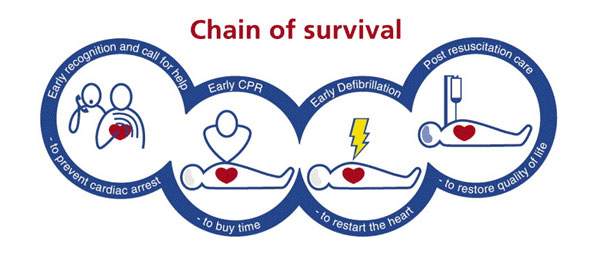
Marijke emphasized four critical steps that increase the chance of survival from 5% to over 70%:
- 1. Early Recognition: Check for breathing.
- 2. Early CPR: To buy the brain time.
- 3. Early Defibrillation: To restart the heart.
- 4. Post-Resuscitation Care: Hospital treatment.
Remember: Any CPR is better than no CPR.
"You Cannot Make It Worse"
The most empowering part of the theory was Marijke’s insistence that the biggest mistake is doing nothing. While the idea of cracking a rib during compressions is a common fear, Marijke was blunt: a cracked rib heals, but a life lost does not. This session wasn't just about learning a rhythm; it was about gaining the "permission" to save a life.
Hands-On: From Theory to Practice
Once the theory was established, the hall transformed into a hive of activity.
Dummies were laid out, defibrillators were unboxed, and the session moved from talk to transition.
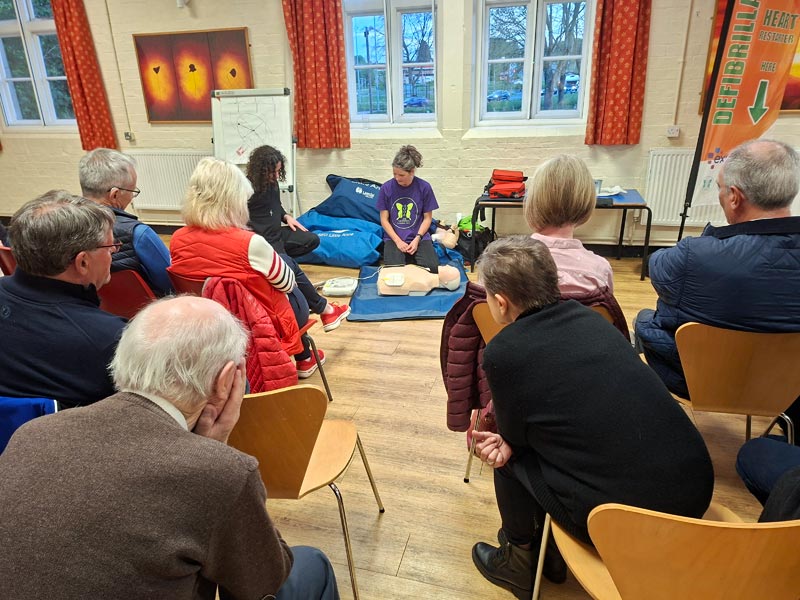
Marijke led with a demonstration that managed to be both informative and unexpectedly entertaining.
Her "amusing commentary" served a vital purpose: it stripped away the clinical fear of the equipment. When the defibrillator pads were applied to the dummy, accompanied by the calm, robotic voice of the machine, the room felt a collective shift from apprehension to engagement.
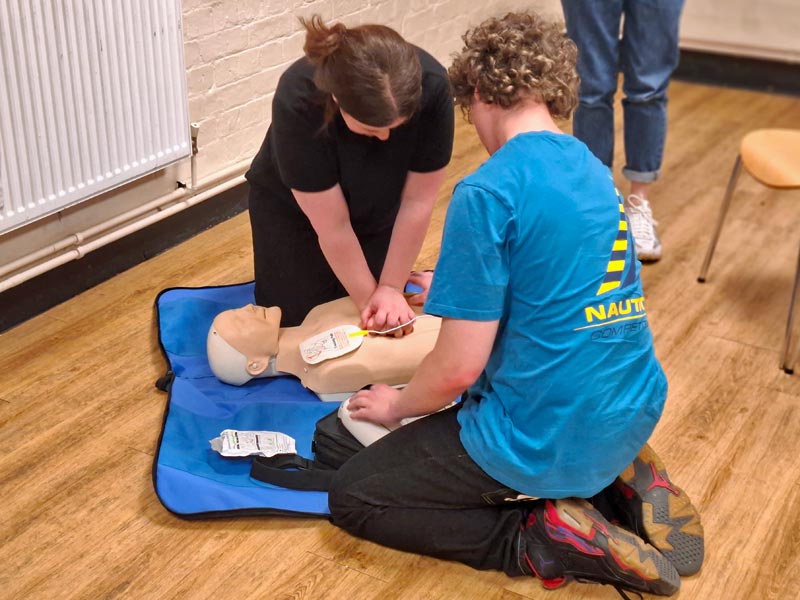
Then, it was over to the attendees. The hall was soon punctuated by a rhythmic symphony of effort: the heavy thuds of chest compressions, the sharp beeps of the defibrillators, and the persistent audio instructions: “Breathe… breathe… do not touch the patient… shock advised.”
One of the most striking sights was that of our younger residents crouching over the training dummies. Their energy was a reminder that these skills are ageless. The physicality of the session was a revelation to many; CPR is hard work, but the adrenaline of the "masterclass" kept everyone moving.
Marijke moved through the participants, patiently answering a second wave of questions about pad placement and timing, before we all paused for a well-deserved break of tea, coffee, and a truly impressive spread of biscuits.
Wrap-up: Refreshed and Ready
As the evening drew to a close, Pat Rice offered a heartfelt thank you to Marijke for her generously donated time. In recognition of her efforts the CVRA made a donation to the Just Giving charity 'Don't stop talking' a cause close to her heart and attendees were encouraged to make personal contributions as well.
Marijke also introduced us to Project Three Minutes, an initiative dedicated to the reality that in a cardiac emergency, every second counts. The goal is simple but profound: to ensure that no matter where you are, life-saving intervention is never more than three minutes away.
Her closing message was one that stayed with many of us as we stepped back out into the night:
"If I can help a community save just one person’s life, my efforts will have been worthwhile."
Walking home afterwards, the conversation centred on a shared realisation. Even for those of us who had attended the session two years ago, we realised how much we had forgotten. The "muscle memory" had faded, and our confidence had quietly ebbed away without us noticing. It proved that these sessions aren't just one-off lessons; they are essential refreshers.
We left the hall not just with a better understanding of the heart’s "electrical system," but with the renewed confidence that if the worst should happen, we - as a community - are ready to take charge.