St Mary's Church
Southwell & Nottingham Church History Project website
A Landmark of Faith and Local History
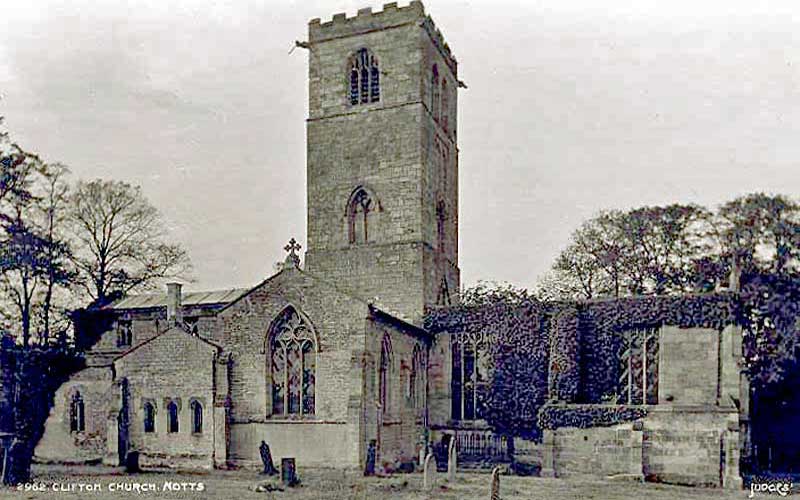
St Mary’s Church has been at the centre of life in Clifton Village for almost a thousand years.
First mentioned in the Domesday Book of 1086, it’s one of the oldest surviving buildings in the area - a place where generations have worshipped, celebrated, mourned, and gathered.
Still at the Heart of the Village
St Mary’s remains an active parish church and a cherished landmark. Whether you come for a service, a quiet moment, or simply to admire the building, it’s a place where Clifton’s long story is still being written.
A Church with Deep Roots
Although the original Saxon church has long disappeared, the site has been a place of worship since at least the 11th century. The earliest parts of the current building date from the 1100s and 1200s, when the nave was expanded and the church began to take on its familiar shape
By the 14th century, St Mary’s had grown into a substantial medieval church. The tower was raised, new bells were installed, and the walls were heightened to add a clerestory. One remarkable survival from this period is the medieval stone cross on the west gable — believed to be the only one of its kind still in its original position anywhere in England.
The Clifton Family Connection
For more than 700 years, St Mary’s was closely tied to the
powerful Clifton family, who lived just across the fields at Clifton
Hall. They funded chaplains, built chantries, and used the church as
their burial place. Many of their memorials can still be seen inside
today, giving the building a strong sense of continuity with the
village’s past.
Southwell & Nottingham Church History Project website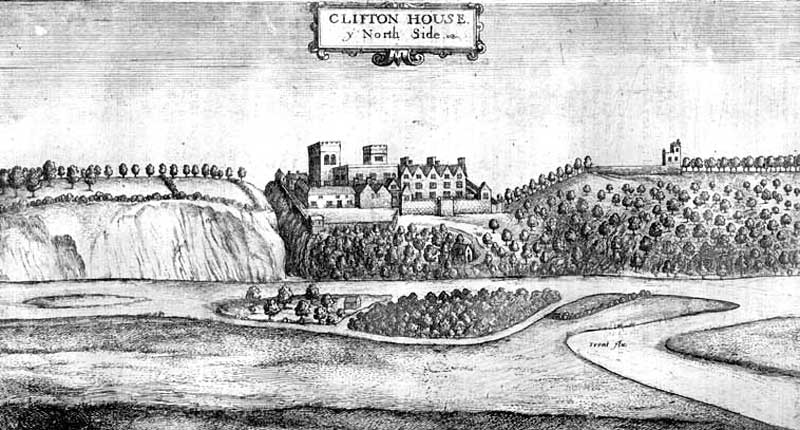
Victorian Revival
By the 1800s the church was in poor condition, and a major restoration transformed it. New roofs, stonework, seating, and decorative tiles were added, and later Victorian architects enriched the chancel with painted ceilings and a striking reredos. Much of the church’s warm, characterful interior comes from this era.
A Church Renewed
Another major restoration took place between the 1960s and 1980s, repairing the tower, conserving the Clifton tombs, and uncovering a hidden medieval altar stone that had been concealed since the Reformation. Today, St Mary’s blends centuries of craftsmanship - Saxon foundations, medieval stonework, Tudor history, Victorian decoration, and modern care.
Visitor Facts: St Mary’s Church, Clifton Village
Where is it?
At the bottom end of Clifton Village: a short walk from Clifton Hall.
How old is it?
St Mary’s has stood here for nearly 1,000 years. A church on this site is recorded in the Domesday Book (1086).
What’s the oldest part?
The north arcade pillars date from the 1100s, making them the earliest surviving stonework.
What’s special about the tower?
The tower was raised in 1339, and the medieval gable cross on the west end is believed to be the only one of its kind still in its original position in England.
Who built and supported it?
The powerful Clifton family, who lived at nearby Clifton Hall for over 700 years, funded chaplains, built chantries, and used the church as their burial place.
Can you see their tombs?
Yes - several Clifton family memorials and tombs remain inside, including the restored 17th‑century vault.
Why does the interior look Victorian?
A major restoration in the 1840s and later in the 1880s added new roofs, decorative tiles, painted ceilings, and a striking reredos.
What’s the most surprising discovery?
A medieval stone altar slab, hidden during the Reformation, was rediscovered in the 20th century and is now placed beneath the modern altar.
Anything modern?
The church houses a Marcussen organ, built in Denmark and installed during the 1960s–80s restoration. The remarkable sound of this organ is partly due to the excellent acoustics of the church with the roof designed by David Jones an accoustic specialist at Nottingham University.
For more information please see: