The Clifton Family

The Clifton Family: 700 Years of Nottinghamshire History
For nearly seven centuries, the Clifton family were the lords of Clifton and Wilford, shaping the landscape, politics, and identity of the area. Their seat at Clifton Hall became one of the most enduring family estates in the East Midlands, and their influence reached from local affairs to the royal court.
From medieval knights to Elizabethan courtiers, Civil War Royalists to Victorian industrialists, the Clifton family left an indelible mark on Nottinghamshire. Their story is woven into the history of Clifton Village, St Mary’s Church, and the landscape that still bears their name.
Origins of the Family
The earliest known ancestor is Alvaredus (Alured) de Clifton, recorded in the 12th century as a landholder and warden of Nottingham Castle. The family were already using the name “de Clifton” by this time, derived from the village itself.
During the 13th century, the Cliftons consolidated their estates, acquiring additional lands from the de Rhodes family and firmly establishing themselves as the dominant local dynasty.
The Cliftons in History — and in Shakespeare
The family’s prominence was such that they appear in Shakespeare’s Henry IV, Part 1. In Act 5, Scene 1, the King refers to “Clifton” while preparing for the Battle of Shrewsbury (1403).
Historically, this refers to Sir John Clifton, who fought for Henry IV and died in that very battle. His death cemented the family’s reputation for loyalty to the Crown.
Wars of the Roses and the Legend of the “Bosworth Pact”
During the Wars of the Roses, Sir Gervase Clifton supported the Yorkist King Richard III. After Richard’s defeat at the Battle of Bosworth (1485), many Yorkist families were stripped of their estates.
Local folklore tells of a pact between Sir Gervase and his friend Sir John Byron of Colwick: whichever man fought on the winning side would protect the other’s lands. Although Sir Gervase was wounded at Bosworth, Byron - a Lancastrian - is said to have petitioned Henry VII to spare the Clifton estate.
While the story is beloved in local tradition, historians generally believe the Cliftons’ survival owed more to marriage alliances than to a battlefield promise.
Two Great Gervases
The name Gervase appears repeatedly in the family tree, but two men stand out for their impact on Clifton’s history.
Sir Gervase “The Gentle” (1515–1588)
A respected courtier under Queen Elizabeth I, he served in France and helped suppress northern rebellions.
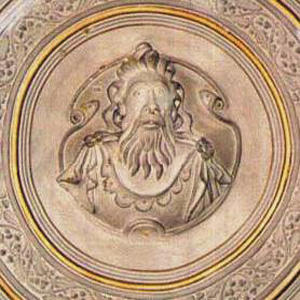
Known for his courtesy and diplomacy, he became a symbol of stability during a turbulent era.
His impressive tomb can still be seen in St Mary’s Church, Clifton.
Sir Gervase “The Great” (1587–1666)
The first Baronet, he purchased the title in 1611 and became one of the most colourful figures in the family’s history. He:
- built the famous bowling terraces behind Clifton Hall
- hosted King Charles I during royal visits
- supported the Crown during the English Civil War
His Royalist loyalty cost him dearly: he was imprisoned by Parliament and heavily fined. He married seven times - often to wealthy widows - a strategy that helped offset the crushing financial penalties imposed on him.
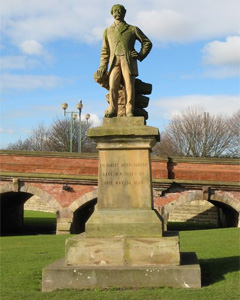
Sir Robert Clifton: Horse Racing, Politics, and Riot (1826–1869)
By the 19th century, the family’s fortunes were under strain. Sir Robert Clifton, the 9th Baronet, was charismatic, daring, and notoriously fond of gambling.
To raise income, he initiated major projects:
- Clifton Colliery (opened 1868)
- Wilford Toll Bridge (completed shortly after his death)
The Election Riot of 1865
Standing as an independent candidate, Sir Robert inspired fierce loyalty. During the 1865 election, tensions erupted when outside workers were brought in to testify for his opponent. A violent confrontation at Nottingham railway station escalated into a running street battle, requiring the 83rd Infantry Regiment to restore order.
Sir Robert died of typhoid in 1869 without a male heir. His funeral drew enormous crowds, with many Nottingham businesses closing in respect.
The Final Chapter: 20th-Century Decline
After Sir Robert’s death, the estate passed through several related families — including the Markhams and Bruces — who adopted the Clifton name to preserve the lineage.
The 1947 Compulsory Purchase
Following the Second World War, Nottingham City Council compulsorily purchased the Clifton lands to build what became one of the largest housing estates in Europe. This marked the end of the family’s 700-year stewardship.
Lt. Col. Peter Clifton (1911–1997): The Last Resident
Educated at Eton and serving with distinction in the Grenadier Guards, Peter Clifton was awarded the Distinguished Service Order for his leadership during the 1945 crossing of the River Po.
He was the final Clifton to live at Clifton Hall. After the estate’s sale, he moved to Hampshire but remained active in public service as a Justice of the Peace and supporter of veterans’ organisations.
His death in 1997 closed the long chapter of Clifton family history in Nottinghamshire.
The American Connection: The “Kentucky Cliftons”
From the 18th century onward, a branch of the Clifton name appears in Virginia, Kentucky, and Indiana. While some family traditions claim descent from younger sons of the English Cliftons, this link is unproven.
What is known is that the American Cliftons produced several notable military figures, including:
- Charles Wesley Clifton, who fought in the American Civil War
- Charles Gerald Clifton II, a decorated U.S. Navy aviator in the South Pacific during WWII
Whether or not they share a direct bloodline, the Clifton name has travelled far beyond Nottinghamshire.
Did You Know?
The motto on the Clifton crest is "Tenez le droit" (Keep in the Right).
You can still see this motto on the uniform badges of Farnborough Spencer Academy (formerly Farnborough Comprehensive) in Clifton today.

Want to do your own digging?
Most of the original Clifton Family documents are housed at the University of Nottingham’s King’s Meadow Campus.
You can browse their online catalogue to see everything from medieval deeds to 19th-century gambling debts.